Saturday, October 26, 2019

Keep on Dancing - with thanks to India

It's been four years since I made an update to this fun blog created as part of my doctoral program at Colorado Tech. Even though I was studying emerging media, the inadvertent theme of the blog became the universality, importance, value, and celebration of dance. How wonderful it is to trace back the previous posts. Spirits are lifted! Of course, dancing is very important within virtual world communities. Dancing virtually is communal like breaking bread together. You may not know people well nor understand their language, but when the music starts it is a few clicks away from feeling yourself take flight, sometimes in scripted harmony like the image below that shows virtual line dancing.

Open Simulator Community Conference 2018 Avatar Dance (I'm on the far right)
2015 was a significant year for me as I was studying the Internet of Things, Smart Cities, and learning about how accessibility is deeply personal. I made a presentation to the NonProfit Commons in Second Life called The Promise and Pitfalls of Realizing the Internet of Things. We had held the fabulous event called the Federal of Consortium of Virtual Worlds Workshop for which I wrote a paper called Advancing Interagency Collaboration Through Constructive Simulation: Results from the 2015 Federal Consortium of Virtual Worlds Workshop. Then the next year I was able to begin teaching an interdisciplinary graduate course for UCF's Modeling and Simulation Program. Activities at the Institute for Simulation & Training kept me busy researching emerging learning technologies.

Tragically, the Pulse Nightclub shooting occurred during the first offering of my graduate M&S class. Hearts sank. Grief settled in. Everyone was stunned and horrified that 49 innocent souls could be snuffed out so senselessly. They were in a dance club. One of the ways the Orlando community healed was to invite organizations to create videos with the theme Keep Dancing Orlando. These videos included the original call to action:


Soon after, many organizations followed suit to honor the fallen including the Orange County Sheriff's Department. The culmination involved making a heart shape with hands implying Love Wins!


The Orlando City soccer team also got into the act of rally the community while setting the bar for having fun at work too:


And at the University of Central Florida, staff from our College of Medicine led through producing the video below. These physicians know the value of dancing for health and wellness. Medical education is tough. The aspiring doctors-to-be bonded with their advisors, mentors, and teachers as a lasting tribute. Such leadership! Dancing is part of the healing arts.


Lots of things happened since 2016, but I continue to see articles and evidence about the value of dance. For some of us who have physical limitations that challenge our dancing ability, dancing as avatars in virtual worlds offer similar bonding and vicarious exercise. I have been interested in dancing mostly to care for my spirit to manage stress. As a faculty administrator, my own playfulness contributed to a culture of creativity and innovation among staff that helped us get through tough times as UCF grew so fast. I also have played video and computer games to help my brain recover from the effects of chemotherapy. Since my health has been challenged again, I am considering the impact of dancing on the immune system.
Valentine's Day 2019


The list of references below represents some journal articles that describe the value of dancing for health, especially for the brain. The use of fMRIs is creating greater insights for researchers. These studies are on my list to explore. Learning science, competency-based and transmedia learning, and information architectures are still my priorities to learn that will also involve 5G and the Internet of Things (IoT). Of course, I am still a virtual worlds champion. What an honor to receive the 2019 Thinkerer lifetime achievement award from the Virtual Worlds Best Practices in Education group. My colleagues cannot know how much of a lifesaver they are including Dr. Selby Evans (Thinkerer), whom I want to be like when I grow up *smiles* (Selby is 89!).

Cross, E. S. (2018). Building a dance in the human brain: Insights from expert and novice dancers. In The Neurocognition of Dance (pp. 215-237). Routledge. Retrieved from: http://downloads.hindawi.com/journals/np/2018/5459106.pdf

Karpati, F. J., Giacosa, C., Foster, N. E., Penhune, V. B., & Hyde, K. L. (2015). Dance and the brain: a review. Annals of the New York Academy of Sciences, 1337(1), 140-146. Retrieved from: https://www.concordia.ca/content/dam/artsci/psychology/penhune/publications/karpati_nyas_15.pdf

Kirsch, L. P., Dawson, K., & Cross, E. S. (2015). Dance experience sculpts aesthetic perception and related brain circuits. Annals of the New York Academy of Sciences, 1337(1), 130. Retrieved from: https://www.ncbi.nlm.nih.gov/pmc/articles/PMC4402020/

Rehfeld, K., Lüders, A., Hökelmann, A., Lessmann, V., Kaufmann, J., Brigadski, T., ... & Müller, N. G. (2018). Dance training is superior to repetitive physical exercise in inducing brain plasticity in the elderly. PloS one, 13(7), e0196636. Retrieved from: https://journals.plos.org/plosone/article?id=10.1371/journal.pone.0196636

Saper, C. B. (2010). The dance of the perivascular and endothelial cells: mechanisms of brain response to immune signaling. Neuron, 65(1), 4-6. Retrieved from: https://www.sciencedirect.com/science/article/pii/S0896627309010472

Sawami, K., Kimura, M., Kitamura, T., Kawaguchi, M., Furusumi, M., Suishu, C., ... & Hattori, S. (2019). Cognitive ability and psychological effectiveness of brain training dance robot therapy for elderly people. Retrieved from: https://www.oapublications.com/oap/uploads/articles/cognitive-ability-and-psychological-effectiveness-of-brain-training-dance-robot-therapy-for-elderly-people.pdf

Collaborating with Drs. Stricker and Calongne in Virtual Harmony Nov 2018
In mid-2019, I was rooting for the Indian Space Research Organization's efforts to successfully land the Vikram spacecraft on the moon's surface. I follow most of the US astronauts who use Twitter and it is impossible not to catch their enthusiasm for space-related achievements. Our Virtual Harmony Research Group also continues to explore space-related themes weekly using OpenSimulator. We made presentations at the 2018 OpenSimulator Community Conference and at the 2019 VWBPE Conference on these themes that are also further described in two IGI Books as well that came out in 2018 and 2019. The space dock shown in the photo reminds me of another favorite dance video referred to in a previous blog post.


India's Vikram Lander did not have a happy ending on the Moon and researchers are still looking into what happened. It was so sad to see the disappointment among all the scientists and school children watching live on television as events unfolded. My curiosity about India led me to Netflix and Amazon Prime to look for documentaries, movies, and TV shows. I will always regret not going on a research trip to India as part of my doctoral program.

My search for Indian shows to watch created an interest in how dance is incorporated into Bollywood movies. Some dance numbers seemed a little corny to me, mostly in the romantic numbers. Most dance numbers were refreshing, uplifting, and made me happy until in some cases the plots resorted to death, destruction, and revenge. Before long, I discovered the star, Hrithik Roshan (fan site), an incredible actor and phenomenal dancer who also starred in a 2019 movie about a real-life mathematics teacher, Anand Kumar called Super 30. Kumar's philanthropic efforts and effective teaching strategies have made some dramatic, award-winning contributions. Notice of Super 30's movie's showing in Central Florida must have come and gone. Movie lovers and educators I know were not aware. Previously I had attended events on the topic of smart cities hosted by the Indian American Chamber of Commerce. Unfortunately, I am not currently involved in the UCF India Center. Perhaps that will change now.

While trying to find out if anyone I knew could lead me how to find how to watch Super 30, two music videos came out via YouTube of another movie that Hrithik Roshan starred called "War". That title is not something that attracts me and at first, it looked like another Hollywood action flick that I tend to watch years later since no one I know really talks about it for long except to say, "Yeah, it was entertaining." The first video released was Ghungroo Song that at first glance appeared so glamorous and sexualized especially for the female lead (Vaani Kapoor), my interest evaporated. This movie did not appear to reflect the challenges of average people and especially marginalized citizens. Meanwhile, as I watched a few Indian movies I would stop and look up as many terms, places, and historical facts to follow along. The movie Jodhaa Akbar revived my interest in history. The soundtrack was mesmerizing and I got it on iTunes just before Apple did away with the service *sigh* The dance scenes in the movie were epic. The whirling Sufis scene stayed with me as a means of mystical meditation.

So I was beginning to get a sense of the languages, geographical landscape, and even some of the religious considerations that India represents. Wow! So much to learn. I watched the Story of India documentary made by PBS and browsed the website for Q&A. As a global learning professional and someone who loved the movie Gandhi, I was aware that India had previously been colonized and involved Pakistan and Bangladesh. The only other Indian-related movie I really remember was another favorite, The Life of Pi.
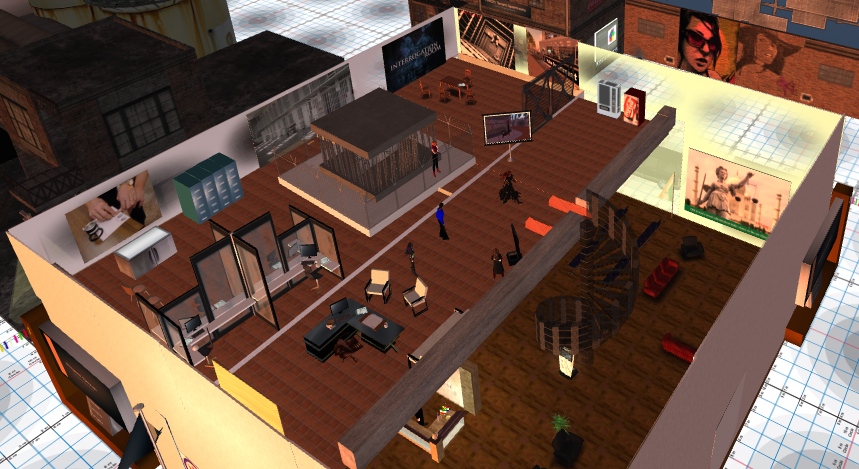
Virtual Juror Class Project 2011
I do feel a deep connection with India since my doctoral program (2011) when for the Strategic Use of Virtual Worlds class, my group (3 members) was involved in choosing a theme and making an environment in Second Life that illustrated the international aspects of community service. We chose to compare legal systems between the U.S., India, South Africa, and Saudi Arabia. Specifically, we chose to make a courthouse and showcase how jurors were involved. Or not involved! We were novice builders and we did not know each other, but we worked hard in our 10-week, online class to create an environment. The project was transformational. My photos do not do justice to the environments since I really did not have the skills (or time!) to use the software.

I will never forget when our VW class was able to make a field trip in Second Life to a location that represented a historical event in Indian history that I remember in my lifetime. When we looked for *any* educational activities that were taking place on the Second Life grid from Saudia Arabia there was no surprise that none could be found. None was found for South Africa too, but for India, we found a place that was made not for educational purposes, but for an apocalyptic, role-playing game.

2011 Second Life Role Playing Game Environment
The 1984 Bhopal gas tragedy represented a disaster with ongoing legal implications for residents who lived and still struggle to live in the region. As our avatars walked through the virtual plant and we saw the haze representing the deadly gas, chills overcame me creating vivid memories of that learning experience. Having a tour guide from India who made the environment was so beneficial to imagine the impact of converging events that led to the tragedy. Nearly the same number of people died in the tragedy compared to 9/11 in the U.S., but over 500,000 were exposed to effects that have created ongoing medical issues. Union Carbide was eventually bought by the Dow Chemical company. My classmates could not believe that such a useful representation of the plant was not being used to teach Chemistry, healthcare, emergency management, business ethics, or legal studies. The environment probably no longer exists in Second Life due to the lack of funding. What a wasted opportunity.

Currently, my study of India includes awareness of recent social justice efforts within arts and media. India is set to possess the largest population in the world and it is the largest English speaking country despite high illiteracy. The caste system creates inequity for many to receive an education, which is why the movie Super 30 is so important for me. Inadequate infrastructure and large rural needs also are a challenge. Ironically, the ancient Hindu celebration called Holi, or Celebration of Spring, or Colors, or Love is for everyone regardless of socioeconomic status. The celebration involves playfully throwing colorful powders on anyone and everyone, practically anywhere during the brief phase. Emphasis on forgiveness and reconciliation is also associated with Holi.

Then on September 21, 2019, the second music video for Roshan's War movie came out. Since then my rational scientific mind has been challenged not to jump up on tables to dance and sing every time I hear it, which is daily now. Immediately, I saw the connection to social equality. The choreography. The colors. The dance moves. The drum cadence. The camaraderie between Hrithik and Tiger (lead male stars). This is not war at all!! It is life celebrated wholeheartedly and physically. I cannot understand a word of Hindi, but it is clear this is a war of playful coopertition (cooperation + competition).

I had to see the War movie now, but where? Who could I get to go with me? Who would understand my fascination with India? Thankfully, Universal Studios in Orlando had a showing on October 2nd, 2019. Typically, I love to attend premiers with all the excited fans who dress up and wait for hours and cheer in the theater. Attending premiers makes watching so much more fun. I have also studied fandom as the intense learning that can take place among communities can be very useful. The discussions about the Lord of the Rings series were intense when those movies came out. Comparisons with the writings and their associations with history were powerful. I also consider myself a fan as a Browncoat (Firefly) and Screaming Firehawk (The Expanse).

So after work, I made my way across town in the rush hour traffic to Universal by myself. The park was busy, but the theaters were quiet. The last time I had watched a movie there was December 31st when we celebrated the new millennium with Prince's 1999 (RIP). There was also a Y2K scare so the rollercoasters were tested 45 minutes to make sure they were operating normally. Thankfully, the War movie was captioned and it was first-rate, worthy of all its records. It is sad to me that my contemporaries are not in tune with how India is advancing in cinema and other areas.

We get so little international news in the U.S. The cost for parking was nearly triple than the cost of the movie but it was well worth it. I cannot wait to see War again or buy it. The full dance scenes were most enjoyable to me. Every little beleaguered, oxygen-deprived cell in my poor body was filled with joy. No wonder there are over a 100 million views of the music video. Congratulations!!! The Ghungroo song grew on me too and I really enjoy seeing all the fan videos making tributes and tutorials for how to learn the steps. I wish I could make a video game where players could actually learn the steps and the songs. These could be used for so much therapy, physical fitness, and team building across generations and societies. In late November, the War Movie became available on Amazon Prime.


Wait! What about the movie Super 30? Remember? The value of education? Studying all the time? Learning from everywhere, questioning everything? Being able to access books and resources? Finally, I found Super 30 available on Hotstar, a streaming service in India. Watched on my iPad and cried a lot. Just thinking about all of the obstacles makes me rethink my life. Oh how we need the appreciation for the quality of life we have. The availability of inexpensive goods, security, opportunity, open libraries, health care... I watched Super30 again the same day on my big TV with the sound system up loud. What a remarkable story.

Of course, I am following Anand Kumar on Twitter and praying for the safety of him and his remarkable school. Contrasting the dramatization of movies with known facts is a valuable exercise in critical thinking. The achievements are real. Wow. How I have dreamed of being able to help create rich media to show the beauty of mathematics and science. The Question Mark scene in Super30 reminded me of learning in virtual worlds where the "Art-of-the-Possible" abounds. I hope some filmmakers follow the graduates of the program and discover the impact these talented, resilient people have made. Congratulations to Hrithik Roshan too for taking the role to make the film. The starpower amplifies the impact. I am so glad I pay attention to advances in science. I look forward to living for the times when we have collaborative, transdisciplinary research that is mutually beneficial across borders to benefit our societies. Learning originates with us.

To learn more about the Super 30 program watch this Al Jezeera mini-documentary.


Wednesday, September 30, 2015

Language of the Heart

Placeholder for me to look into this movie and movement. How I miss the fellowship with my doctoral cohort.

Shake the Dust 


Shake the Dust from BOND Strategy & Influence on Vimeo.


Thursday, October 16, 2014

Research in Virtual Environments - Update

My quest continues to apply existing research findings from my doctoral program. Progress has been made to create my own virtual world regions and incorporate artful freebees available via Creative Commons licensing. Family members have joined in to experience virtual field trips and communities across distance. Fusion Unlimited Networks Research was incorporated as a non-profit company in March 2014 to use simulation for philanthropy. In May, I joined colleagues to work part-time at UCF's Institute for Simulation & Training in METIL. A huge milestone was the publication of my dissertation by Proquest in October 2014. For anyone who is interested, a .pdf document is available from the CIRET website. Naturally, my virtual region has to become a tribute to space exploration and marine exploration, and well.. all exploration!

Space Room in Virtual Cabin Retreat
Delightful's Region on Kitely
Discovering new pathways of inquiry are sought to design research questions regarding virtual experiences. Possibilities abound as the OpenSim platform and community matures. Many researchers are trying to become versed in multiple platforms, exchanging knowledge along the way. Another great way to learn is from children of course. Some of my grand-children are old enough now to join me together in the same place or apart to gather virtually. We have created memories to treasure of shared, virtual experiences more meaningful with loved ones. Cross-generational learning is feasible to assist the aging and maturing population.

Discussing Lego Camp Together
Discussing Lego Camp Together at a Distance
Creating and participating in mirror worlds offer the potential for using virtual environments for training. The challenge has been how to inexpensively create models and environments. Continued involvement with the MOSES OpenSim community afforded the opportunity to learn about a scanning project of the actual location where I work. Participating in making the machinima below was a bonding event in itself. I cannot wait to learn the digital literacies to get behind the camera and make stories myself. Considering the talent and generosity within the community, it won't be long for me to learn. Many people are excited to make stuff to print in 3D. I want scan stuff to put into 3D worlds. Again, the possibilities are promising.


Thursday, May 1, 2014

Richness Afforded by Avatar Use

Do we really have a common definition of avatars? Many people think of the movie Avatar that featured a man inhabiting the form of another species where he was required to take on characteristics of that being while overcoming his own human limitations. This notion of avatars seems partially true.

Avatars to me represent an interplay with 'self' that is as diverse as the personalities of the people whom inhabit their avatars. Of course not all people inhabit thier avatar, if they have one at all. Much more research is needed on identity, but it is clear that the leaders who foster communities across distance and time zones often use avatars. These communities provide the glue that connects annual events like conferences.

Speaking of avatars, The Virtual Education Journal of the International Society of Technology in Education's Virtual Environments Network features some profiles of educators who are often tireless scouts of new media and technology. The issue is called My Avatar and Me. Check it out:


Tuesday, February 18, 2014

Applicability of Research

New chapter. My research journey included defending my dissertation on 12-19-13. The findings led me to add the term embodied to the title after it was so clear to me how survey respondents were attached to their avatars, groups, and the milieu of virtual environments. 

I took my time to consider avenues of future research and applicability. Since my last post, I moved back to the Orlando area and am researching how to start a non-profit corporation to apply and continue my research. Philanthropy appeals to me to give back for the blessings I have received. 

Last year was tumultuous with taking on a new job, moving to a new city, my daughter's car accident, and then getting caught up in a reduction of force all while trying to complete a doctorate program. Waiting until degree completion would have been optimal, but the challenges served my thinking and my study. The document turned out to be about 320 pages. Hopefully, I am pioneering some new realms of thought. 

There are many other capable researchers exploring personality and identity using avatars. Several researchers are also studying collaboration. Gaming mechanics and the impact of a learning organization kept coming back to me so these elements were added to my calls for future research. In the end, I mashed up many ideas and constructs that will take years to apply in praxis. 

Last September, the OpenSim Community Conference was the first community-supported event that illustrated what committed volunteers can do with sufficient tools, time, and leadership. Things worked so well that it felt somewhat miraculous. I was merely a spectator admiring the hard work of others. The event made me think  of how transformations occur in people, groups, organizations, and society. How do we detect and see the currents of change?  
Open Simulator Community Conference 2013 venue
http://conference.opensimulator.org/
I have been thinking a lot about cross-generational learning and how strengths-based teaming allows those with motivation to learn and enjoy whatever they are committed to doing. The craze of massively open online courses has in my mind led to replacing the C in MOOC from course to community. It is the transformative capability of community collaboration and involvement that attracts my fascination. Such transformations enable people (and groups?) to believe in what they previously thought not possible. This is the business I want to be involved in to invest my strengths.   

Personalized learning suggests that those who have interest and ability should be able to advance and collaborate with others who share goals. Wouldn't in be revolutionary if online virtual conferences could be open to anyone with capability and commitment to engage? Such events could lead to virtual open online communities. A sort of sponsorship could make it work. Sponsorship is something I think a lot about too. 

Once virtual communities form, what makes them sustainable? My study suggested that how volunteer communities build learning communities towards transdisciplinarity impacted empowerment. The potential for virtual learning organization communities may preserve scant resources of time, energy, funding, and the environment. Much more research is required. I am looking forward to new opportunities to learn and grow now that I am finally, Dr. Truman. My gratitude cannot be more heartfelt for my mentors, peers, family, and friends.         
 

Thursday, October 3, 2013

Towards Transdisciplinarity: A Research Quest

The quest is on to identify the most collaborative groups in virtual environments to collect data for my dissertation study. No doubt I will miss many. By December, the results will be compiled and ready to share. I am relishing the ability to be a full-time doctoral researcher after experiencing a reduction in force on my new job. Fortunately while I was in Texas I was able to meet with Dr. Larry Johnson, CEO of the New Media Consortium, and attend the national conference of the International Society of Technology in Education (ISTE) in San Antonio where I got to hear Dr. Jane McGonigal and meet friends from SIGVE and the Gamesmooc.

Here is a little video I made to introduce myself to those who do not know me. I will begin sharing more findings from research into collaboration using virtual environments as I progress. These environments will connect to physical environments, simulators, and big data. Pioneering virtual community learning environments is a passion of mine. I cannot wait to apply what I have learned in my newest doctoral program. It's been 12 years since being unable to finish the first doctoral program. Slides used for my dissertation defense are also linked below. Stay tuned for results and thank you for your interest.


Btruman prosp defense-slideshare from Barbara Truman

If you are a user of virtual environments and you collaborate using an avatar or character, please feel free to participate in my dissertation study. More information can be found on my web site that includes definitions and a link to the survey and informed consent. The survey will be closed on November 5, 2013. 

Sunday, June 9, 2013

Embodiment of Researcher for Transdisciplinary Inquiry: Towards Transdisciplinarity

Let’s role play. Imagine that you are a scientist participating in a collaborative research project. Your whole life you dreamed of being a part of a high performing team whose contribution leads to a revolutionary discovery fundamentally changing what humans know.

Perhaps the discovery is health related. Perhaps the discovery connects humanity in new ways. How do you work? What does your daily work routine look like? How do you collaborate? What tools do you use? When and where do you best think? Do you have enough reflection opportunities? Do you experience intimacy of the mind as you feel assumptions shift?

How does technology help you do your job better? Are you using technology to the fullest to achieve your best? Do you know how advances in computing will improve and threaten your existing habits of mind? Chances are the people below could not imagine how computing would one day manage the types of translations they volunteered to make.    

Library volunteers translate messages during World War II
Washington, D.C. Volunteer translators in the Red Cross district library translating messages from many foreign languages: Dutch, Polish, German, French, Italian, into English so that they can be censored before going to relatives in this country The Red Cross handles messages between people in foreign countries through their Foreign Inquiry Service http://www.loc.gov/pictures/resource/fsa.8d21281/
When do insights occur? How well are they captured? How is scientific inquiry and influence affected at a distance when stakeholders are among different agencies?

Now imagine that you can participate in real-time scientific discovery as a citizen scientist by simply turning on your 3d home theater to a particular channel. Big data flows into your home, around your body and you are connected to biological, chemical interactions that are tested. Perhaps you can choose which experiments to observe. Imagine how this redefines Reality TV!     

My project for CTU’s Web Science and Technology class, led me to find out how some scientists are prepared to use advanced collaborative software.  How is research performed at a distance with others who have vastly different expertise? Is the assumption that since people have advanced degrees that they inherently can figure out how to use technology to collaborate?

This week I am attending the TeamSTEPPS National Conference in Dallas. http://teamstepps.ahrq.gov/nationalconference.htm It is a conference sponsored by the U.S. Department of Health & Human Services and is all about teaming using a health care model. While the conference is not about inquiry and research, it is about collaboration. For my job, I am assisting in the creation of an innovative program that focuses on Interprofessional Collaborative Practice involving nurses and other healthcare professionals. The topic is timely due to the government regulations on health care reform. A faculty member whom I am working with on this initiative was a former president in the Society for Simulation in Healthcare https://ssih.org that capitalizes on learning from mistakes and customizing evaluation. Simulation technology is becoming used more for inquiry such as in transdisciplinarity.

Check out my curated topic via the web 2.0 software tool Scoopit:

Thursday, May 30, 2013

Nontraditional Student Dreams

My family must be thankful. After years of taking classes, the end of my doctoral program is in sight. The previous doctoral program took seven years of investment before life got in the way and I could not finish it at all. What a devastating heartbreak to have made so many sacrifices not to be able to enjoy the success of a lifelong dream. Now it's my turn. It's my time. I want to do a great job with my research.

I salute all the adult learners who are trying to better themself while working full time, taking care of kids or parents, and trying to keep their grades up. What a difference an education makes. Nontraditional students are not the only ones who make sacrifices when their parent, spouse, or sibling works all the time for a good cause.

This quarter for my Web Science and Technology class at CTU, we are creating projects that have applicability into our research studies. For mine, I wanted to think deeply about what transdisciplinarity might look like. There are some 2D illustrations that try to express what the concept is and how interactions occur, but how do you know when transdisciplinarity is present? Can one person "embody" transdisciplinarity or must a group of people working together summon it?

The Weavers, a painting by Jeanie Tomanek
"The Weavers" by Jeanie Tomanek
How can transdisciplinarity be modelled in 3d such as in open simulation? How does even thinking about modeling it affect how I will approach studying it for my dissertation study? Collaboration takes many forms. Face to face engagement is one of many instantiations of collaboration. When scouring the Internet looking for suitable representable images, "The Weavers" came up created by the artist, Jeanie Tomanek. She has a store on Etsy where you can buy her art work. To me, the piece shows interaction between the individuals enabling creation of a whole new vision.

So, in order to make a 3d model of transdisciplinarity, I wanted to illustrate real-life examples that may be close to achieving what is possible. A couple of months ago I was walking through the airport while on a trip. At the bookstore I saw the Time Magazine article describing the group Stand Up to Cancer. The article described how dream teams made up of diverse scientists are being funded at much higher rates than organizations such as the National Institute of Health (NIH) and the National Cancer Institute (NCI). Clearly, cancer is a wicked problem that involves complexity. The basis for my dissertation study is informed by how the NCI and NIH are trying to evaluate collaborative grants that have been funded. What new research methods were achieved that were not possible without extreme collaboration? Right now I am selecting questions used in prior assessments to use in my study. These resources are made available via the National Cancer Institute's Behavior Research Center and Team Science Toolkit.  

IRB approval was required for my project and obtained. So far I am waiting to hear from representatives to see if they will shed light for me on how teams are supported with training and tools.

If I cannot obtain referrals from members of the organizations contacted, then I will need to switch over to another area to use as an example for how scientists are collaborating across and perhaps beyond disciplines.

Saturday, April 6, 2013

Heroism and Tribute

Nothing like a major job change and move across country to infuse your doctoral studies. In late January my adult hero children helped me drive to Dallas where I accepted the appointment as Vice President for Learning Technologies within the company, Academic Partnerships. A thrilling opportunity for which I was deeply honored.

Family is priceless. One of the reasons why I moved from mine is to amplify my life's work and research to support more families.

On night of day 2 on the new job, I got the call every parent dreads. Terrible auto accident. Car totalled. Ambulance enroute to ER.

Thankfully, angels of mercy were following my daughter that allowed her to drop off my grandson five minutes before she was struck. Good samaritans carried her off the pavement within the path of oncoming cars after she crawled from the remains of her crushed car. The Fire Station was less than a mile away. Cell phone found. Family contacted. Brother and father beat the ambulance to the hospital. Sister enabled me to speak via cellular in the ER. Diagnosis, surgery, recovery and healing in process. Hero family! The good samaritan turned out to be a nursing student that knew better what to do. She followed the ambulance to the hospital.

My colleagues and classmates sustained me again as I struggled to work and learn apart from my family. Fortunately we all have the ability to choose how we encode memory from experience. Recalling heroism inspires and motivates me to make the most of each second.

Prior to moving, my former staff and lifelong colleagues at UCF made me an incredible tribute. The video is called Online Learning: A Life's Work and runs about 10 minutes. It illustrates how someone in the right place at the right time with the right support can ignite collaboration and team work that can create transformational positive change. Now I am in a position to help change the world. My Wordpress work page describes more about my professional activities if I get time to describe them!

Saturday, December 15, 2012

More Cross Cultural (Dancing) NASA Science Style

In case it has not been obvious enough, I have been making the case that dancing is a universal language art form (see previous posts that feature US Marines, Stormtroopers and crazy French guys). Don't get all serious on me just because I am taking the Coursera "Think Again, How to Reason and Argue" class offered by Duke University. Thanks Dr. Cooper for insisting I sign up to check out the format.

Actually it does not take much for me to post a fun dance video. This one is irresistible as it has my hero, Mike Massimino in it who made the first tweet from space. Someday I would like to shake the hand that jerked that door off the Hubble Telescope during his spacewalk I watched live.

Enjoy this delightful mash up of talented young artists with veteran space men and women.


Thursday, November 29, 2012

Federal Virtual Worlds Challenge Winners 2012

The Federal Virtual Worlds Challenge is an annual contest that seeks innovations in immersive learning environments. In 2010, Drs. Calongne and Stricker won first prize for their Mars Expedition Challenge entry.

This video showcases the 2012 winners. The winners are revealed at the annual Defense GameTech conference held in Orlando, FL.


Saturday, October 20, 2012

Symposium Renewal of Spirit and Mind

Fall is shining brightly among the shimmering golden Aspens in Colorado Springs. Summer challenged me  with personal circumstances that nearly derailed my academic progress. I missed the opportunity to attend a planning retreat in New Harmony, Indiana in early October that is connected to the Virtual Harmony open simulation project. One of the most exciting things about the project is a curriculum on sustainability. Connecting my studies on Transdisciplinarity to the concepts contained in the Handbook on Sustainability Literacy is central to integrating work, home, and school. The New Media Consortium's new global advisory group and publication on the outlook for STEM education should fit nicely into my studies. The NMC STEM wiki illustrates the evolution of thinking that should lead to new collaborations that cross domains.

My trip represents the fifth time I have come to Colorado Springs for the residency requirement for my program, Doctorate of Computer Science, Emerging Media. It is hard to describe the value of having such a gathering like a conference where so many students and faculty fly in to have a meeting of minds. Blending the online activities at a distance and reinforcing relationships make learning more sacred.

On Wednesday morning, President Bob Lally, CTU Chair of Homeland Security, outlined new changes planned for future Symposia at CTU. The goals sound exciting to increase interaction within the programs face to face. Being able to meet more Doctorate of Management students is appealing to me, especially those who are in the Emerging Media track. The fact that the meetings will stay in the Springs and be held in the Cheyenne Mountain Resort is really exciting. The NUTN2010 Leadership Summit was held at the Resort and I will never forget eating s'mores by the outdoor fire pit with my co-presenters, Anne Keehn and Mark Resmer who passed in 2011.

CTU Symposium Workshop Google Doc Product
CTU Fall 2012 Workshop Google Doc
One of the best things about getting together with my cohort and the faculty is the inspiration that results. The diversity of the students is remarkable and they are all in occupations where they are trying to make a difference by directly applying what they learn in their academic programs. The cross pollination that occurs from interacting with adult, lifelong learners makes the experience invaluable. Dr. Calongne shared the last, all day workshop that discussed topics related to emerging media and technologies and how to get our writing done well. Her passion is infectious and her organic collaboration resulted in a co-created Google Doc that represents a time capsule of our current thinking. The content of the Google Doc can be found at Dr. Calongne's blog site. Enjoy!


Sunday, July 29, 2012

More Cross-Cultural Traditions and Collaboration

Gentle readers, since my research has shifted from game-based learning (gbl) itself as the primary focus to using gbl for collaboration, examples are sought to illustrate the concept. While the example below does not involve gaming, it certainly involves play. Political positions aside, the dance choreography and planning in the video requires considerable collaboration and practice. The US Military has performed joint activities for many years in efforts to coordinate people, technology, and strategy across services. Budget restrictions and costs of wars have forced greater collaboration. Motivation in game-based learning is voluntary whereas compliance is required in such a highly regulated organization. Social media has been stretching the limits of professional courtesy as individuals have equal power to express their humanity. I salute the authorities who gave blessing for this expression of cross-cultural communication via dance. Let's see how viral the video becomes over time.

Sunday, July 22, 2012

Interplay: Systems and Design Thinking

The Dance of Change and the Fifth Discipline are two books that really helped me deal with growth and complexity in my job at UCF over the years as it became such a large, public research university. These books were not core to my own rapidly changing field of learning technology. Rather the books were necessary resources to apply many of the concepts of my field. Design Thinking often is sought to provide innovation, yet we know that sustainability and scalability are required to be cost effective.

The role of dialogue in collaboration has been both a positive and negative force that I learned best from Peter Senge's research into learning organizations. The Society for Organization Learning (SOL) explores how organizations collaborate. The book Presence describes qualities and actions that make use of dialogue to anticipate the future.I finally got around to reading the book and it was perfect to apply in my research into collaboration.
The 2012 annual conference of the New Media Consortium was held in Boston in June. The presentation with Cynthia Calongne, Andy Stricker, and Francisca Yonekura involved for my part, describing the importance of curating habits through presencing. Below is a recent talk given by Peter Senge in Argentina where he emphasizes the importance of planning for interaction with interconnected systems. I wonder if his recent work into sustainable education focuses on how people learn. It is so refreshing to reconnect with thinking that involves the head and the heart for sustainable innovation.
25 Minute Video of Dr. Peter Senge speaking to a Group in Argentina
http://www.wobi.com/spotlight-peter-senge

Malcolm Brown presented the terrific talk below at the 2012 NMC Conference in Boston where he mentions design thinking. Can we embrace both systems thinking and design thinking? Must we? What are some examples?


Saturday, June 2, 2012

The Pay Off for Individuals, Families, and Communities

One of the neatest things I have been able to do in my academic career is to participate in creating a Leadership Institute for the professional association, EDUCAUSE. The Institute was originally for instructional designers and was later changed to learning technologists. As founding faculty members of this Institute, myself, Alan Levine, Larry Ragan, Rick Shearer, Kathy Cristoff, Heather Thompson, Cynthia Golden, and Carole Barone saw first hand just how diverse America is with the variety of educational institutions that exist. Public, private, for profit, large decentralized state schools, and very small Liberal Arts Colleges make up the tapestry of opportunities available to attend college in the United States. Some staff have very specific specialized occupations while others are generalists wearing multiple hats. Leadership was a constant need across the continent to assure academic success.

This blog is typically used for my doctoral studies performed at Colorado Tech, where I have felt like my brain is all lit up and my pants are on fire. Recent blog posts about graduation ceremonies compel me to share another video.

This is the best video my home institution has ever made in my opinion. It is a reminder of what I do for work and school. Often, I am reminded how I am living my dream to be able to pursue a doctorate degree. For all the nontraditional students out there, I dedicate this video to you. Your personal learning network is behind you as well as your kids, your parents, your siblings, and friends and someday all the hard work will pay off.

When you graduate, make sure you take the time to thank your supporters.

Enjoy this video! The voice of the speaker is Judge Belvin Perry who presided over the famous trial held in Orange County, Florida in 2011.


Thursday, May 24, 2012

Cross Cultural Traditions, Graduation and Engagement

 Anyone who spends time in Second Life soon learns the importance of dance. Sharing elegant dances cements memories and creates deeper bonds with the people behind the avatars. When I dance in harmony through synchronized scripts, it feels like personal ballet in my head. These dances often do not occur in dance clubs, rather they are embedded in events as part of designed experiences. Sometimes dancing is a spontaneous response during breaks in conference presentations where a leader sets the tone.  

Today, the United States Department of Education posted on its blog a story called "Endless Possibility" about the success of Navajo Technical College where there is an 85% graduation rate. The curriculum sounds impressive. Clearly some things are working to retain students. Secretary Arne Duncan is shown in the video below learning about the students and curriculum, but what impresses me most is the incorporation of the dance. How nice it would be if in our graduation ceremonies our families could join in and march during the pomp and circumstance after the ceremony.

Wednesday, May 23, 2012

Emerging Media Cross-Cultural Communication

I dedicate this video to the more high tech, trans-media version of cross-cultural communication. References to Star Wars rarely fail to connect. Whichever your preference, do get up and dance. Get those neurons and synapes shufflin' inbetween doing your research of course.

Classic Cross Cultural Communication

My last post was a bit heady and long so to illustrate some of the same concepts I dedicate this video to those hard working scholars and researchers who can use a break.


Monday, May 21, 2012

Greetings! As a follow up for my EM820 Social Media doctoral class, I have been learning about study abroad programs. The trick of getting an applied degree is to align assignments with work or life. In this case, I have learned from the following articles how social media is used in study abroad programs and how metacognition plays a role in trans-cultural literacy. These topics will be useful for my dissertation on the topic of trans-cultural collaboration. Enjoy!

Annotated Bibliography 


Briers, G. E., Shinn, G. C., & Nguyen, A. N. (2010). Through Students’ Eyes: Perceptions and Aspirations of College of Agriculture and Life Science Students Regarding International Educational Experiences. Journal of International Agricultural and Extension Education, 17(2), 5-20.

This article chronicles a study performed at Texas A & M University that involved 956 students within the College of Agriculture and Life Sciences that described attitudes towards study abroad. 79% of students were white. Findings showed that students preferred faculty-led programs they communicate values. Migrants represent 13% of North America. Affordability was the primary barrier to participate. 83% of respondents believe that engaging in study abroad would make them more competitive and 65% of undergraduates and 72% of graduate students indicated desire to study abroad. The study recommended application of simulations and case studies within traditional courses to transition to real-world experiences.    

Burke, M., Marlow, C., & Lento, T. (2010). Social network activity and social well-being. Paper presented at the Proceedings of the 28th international conference on Human factors in computing systems, Atlanta, Georgia, USA.

This article represents a collaboration between researchers at Carnegie Mellon and Facebook. Social capital is explored through bridging and bonding via directed communication and consumption. Almost 1,200 participants were recruited and their activity in Facebook was analyzed and compared with self-reported data using the Hadoop distributed computation program. Engagement with Facebook is correlated with overall well-being. Future work is called to determine cultural norms among individuals and group interaction.  

Diehl, W. C., & Prins, E. (2008). Unintended outcomes in Second Life: Intercultural literacy and cultural identity in a virtual world. Language. Intercultural Communication Language and Intercultural Communication, 8(2), 101-118.

The article discusses findings from an exploratory study where findings are analyzed related to the construction of cultural identity and development of cultural literacy. Twenty nine Second Life participants were involved using Cultural Historical Activity Theory and Heyward’s model of intercultural literacy. Intended and unintended outcomes resulted from what the authors describe as participation in an Activity System. Respondents constructed shifting identities through changing their avatar appearance. Openness toward new viewpoints, use of multiple languages, cross-cultural encounters led to intercultural literacy. A Reuters report from 2007 indicated that of the 100 countries countries represented in Second Life, 61% were European. Four types of dialogue were studied identified by Burbules (1993) that include dialogue as conversation, inquiry, debate, and instruction. Shock and discomfort that result from cross cultural encounters and experiences are required to create intercultural literacy, described as six levels, with the ability to consciously shift between multiple cultural identities as the highest level.       

Fouts, J. S. (2011). Technology and Innovation Report Using Virtual World Journalism for Health Education. Journal of Healthcare, Science and the Humanities, 1(2), 127-139.

The report describes actions made to support critical health science journalism among key political bloggers two years before the 2011 revolution in Egypt. Twitter, Facebook, and virtual worlds were critical venues empowering revolutions across the Middle East in 2011 as media censorship was common. In 2009, the global scare for H1N1 swine flu led the Egyptian government to slaughter pigs across the country to minimize pandemic. The Centers for Disease Control had most accurate information although the World Health Organization had responsibility to provide information. A virtual newsroom was made in Second Life that allowed participants to gather, collapsing geography to hold press conferences that was streamed to the Internet.  


Fowler, S. M., & Pusch, M. D. (2010). Intercultural simulation games: a review (of the United States and beyond). Simulation & Gaming, 41(1), 94-115.

The article focuses on intercultural simulation games with an emphasis on how the game is played. The distinct individualistic culture compared to the competitive and collective, collaborative culture is illustrated as people move between cultures. Paige 1994 defines 10 cultural differences within the Intensity Factors of intercultural contact. Simulations address the heart set (attitudes and intentions, head set (knowledge) and hand set. The authors assert, the question isn’t whether or not to use a game or simulation, but which one as games are an affordable means to cement the learning through debriefing. Second Life is referred to as a means to do activities.    


Halfin, J. (2011). How Online Tools Can Be Used to Enrich Study Abroad. University of Minnesota, Twin Cities. Retrieved from http://www.internationalyeti.com/documents/Halfen%20-%20Online%20Tools%20to%20Enrich%20Study%20Abroad.pdf

This paper describes how a combination of technologies combined with pedagogy provides opportunities to enhance study abroad in a holistic manner. Learner support before, during and after study abroad programs is enabled by using what students are increasingly using everyday: social media. Halfin cites Dan Pink’s work on motivation calling for educators to make learning outcomes personal for students by embracing their own goals and with metcognition. Second Life and World of Warcraft are also discussed for addressing curricular needs for culture shock, interpersonal literacy, and reentry.   


Himelfarb, S., & Idriss, S. (2011). Exchange 2.0. Washington, DC: U.S. Institute of Peace.

This report is produced by the Institute of Peace and is oriented toward diplomats, but can be applied to students studying abroad. Fewer than 2% of American students study abroad and about 4% of students are international. The least expensive program is $4,000. ExchangesConnect, administered by the Bureau of Educational and Cultural Affairs within the State Department, is an open international online community allowing students to connect with prospective, current, and former exchange participants. The report recommends significant training within public and private partnerships to address challenges that includes an open source clearinghouse or repository of cultural and educational exchange programs.    

Lane, H. C., & University Of Southern California, Institute for Creative Technologies (2007). Metacognition and the Development of Intercultural Competence, retrieved from http://handle.dtic.mil/100.2/ADA470403

The article asserts that a critical component of the development of intercultural competence is metacognition through the importance of self-assessment, monitoring, predictive, planning and reflective practice and skills. The role of intelligent tutoring, experience management and the adaptation of virtual humans is discussed to support metacognitive development. Intercultural competence requires metacognitive maturity that must be fostered in identifiable stages of development. The Peace Corps model to develop intercultural competence is discussed in the context of Bennett’s Development Model of Intercultural Sensitivity (DMIS) construes differences. The DMIS posits two worldviews orientations: ethnocentrism and ethnorelativism. Guidance is especially important to avoid withdrawal during mid-stage DMIS when cultural differences are truly appreciated for their significance. Frame shifting ability and the ability to assume different perspectives are advanced stages within the DMIS. Implicit feedback from simulations include speech rate, intonation, tone, emotional state, facial expressions, body language and personality traits. Explicit feedback from the tutorial improves the level of interpretation for the learner and can help with adaptive thinking under stress.   

Mason, H., & Moutahir, M. (August 18-20, 2006). Multidisciplinary Experiential Education in Second Life: A Global Approach. Paper presented at the Second Life Community Convention, San Francisco.

This article was published shortly after Second Life became widely used in education. One finding was that students ability to adapt in Second Life was less dependent on technical skills and more dependent on attitude. The study abroad component was followed up by the use of Second Life for ongoing collaboration.  

Murray, K., & Waller, R. (2007). Social networking goes abroad. International Educator, 16(3), 56-59.

This article describes taking advantage of the social media uses that students are engaged for the purpose of creating more of a community of learners. Student to student connection is described how existing study abroad students can assist with recruiting new students. Facebook was cited for its ease of sending messages to groups. Concerns are discussed for how students may inappropriately publish content and sentiments that are highly unflattering.   

Seigel, S. E. (2010). Gaining Cultural Intelligence through Second Life Learning Interventions. International Journal of Advanced Corporate Learning, 3(3), 45-50.

This research article describes IBM’s involvement with the virtual world, Second Life, to equip employees with more authentic, live training experiences as country-natives around the world are expected to work together. Preparation in advance of face to face meetings is also described to build cultural intelligence, which has no universal heuristics for measurement. The literature review and research design seeks to compare affordances of in-country, face to face training, simulation game, and Second Life immersive training. Twelve participants from 10 countries engaged in one-hour sessions that included interventions, culture sharing, reflection, and debriefing that may become part of IBM’s required worldwide orientation for new employees. One consideration of the design is the limitation of the use of existing rather than new employees of IBM in the study. Stanford University faculty were involved in interviewing study participants, but the data was unavailable at the time of publication.    


Shively, R. L. (2010). From the Virtual World to the Real World: A Model of Pragmatics Instruction for Study Abroad. Foreign Language Annals, 43(1), 105-137. doi: 10.1111/j.1944-9720.2010.01063.x

This research article nicely describes pedagogical components that can be combined with immersive learning technologies specifically for language learning, but applies to intercultural communication. Shively advocates training for learners and faculty for applying support before, during, and after study abroad experiences. Building confidence is gained from a combination of expert guidance and self-directed learning including reflection. A comprehensive pedagogical framework of the 6Rs (researching, reflecting, receiving, reasoning, rehearsing, and revising) by Martinez-Flor and Uso-Juan (2006) applies to develop pragmatic and intercultural competence. Croquelandia is an immersive game lauded for language learning usage as well as Keypals and the DIE model of debriefing (description-interpretation-evaluation). Role plays and simulations are cited for usefulness as well as the ability to continue relationships online.

Sykes, J. M., Oskoz, A., & Thorne, S. L. (2008). Web 2.0, Synthetic Immersive Environments, and Mobile Resources for Language Education. Calico Journal, Computer Assisted Language Instruction Consortium, 25(3), 528-546.

This article describes Internet-based interactions as real verses simulated communication that has transformational potential to change roles of people. The premise is juxtaposed to computer-assisted language learning (CALL) and refers to the concept of social virtualities. Study abroad blogs are cited as examples for language learning where cell phones enable instantaneous sharing of content to connect communities, whether family or classmates. Steven Thorne’s cultural-historical framework is postulated as aesthetic shifts in human communication emerge within cultures of use. Social experimentation used in MMOGs involves identities in sociopragmatic considerations involving presence, space, and gestures. Synthetic immersive environments enable learners to practice in emotionally-engaging, low-risk to improve pragmatic competence. Users feel results of their actions without causing actual harm. 

Yee, N., Bailenson, J. N., Urbanek, M., Chang, F., & Merget, D. (2007). The unbearable likeness of being digital: The persistence of nonverbal social norms in online virtual environments. CyberPsychology & Behavior, 10.(1), 115-121. doi:10.1089/cpb.2006.9984

This research article cites the utility of using immersive environments such as second life for conducting research similar to face to face research used in social science. Experimental control, precise measurements, and replicability have helped researchers learn therapeutic potential. Presence research measures perceived “real” behaviors such as nonverbal and physical responses. Proxemics, interpersonal distance was studied to compare face-to-face and virtual behaviors among men and women in groups based on Equilibrium Theory. Findings support social norms across virtual environments for utility of longitudinal social interactions that go beyond undergraduate subjects.    

Yeung, C.-m. A., Liccardi, I., Lu, K., Seneviratne, O., & Berners-lee, T. (2009). Decentralization: The future of online social networking. Paper presented at the W3C Workshop on the Future of Social Networking, Barcelona, Spain.

This paper resulted from a professional networking meeting where a call for an open and independent, social networking framework was made. Two problems resulted in the need: information silos and lack of user control over data. Diagrams are provided to illustrate architecture of closed, proprietary and open systems. Protection from censorship and assurance of privacy are cited as drivers toward an open social networking framework.